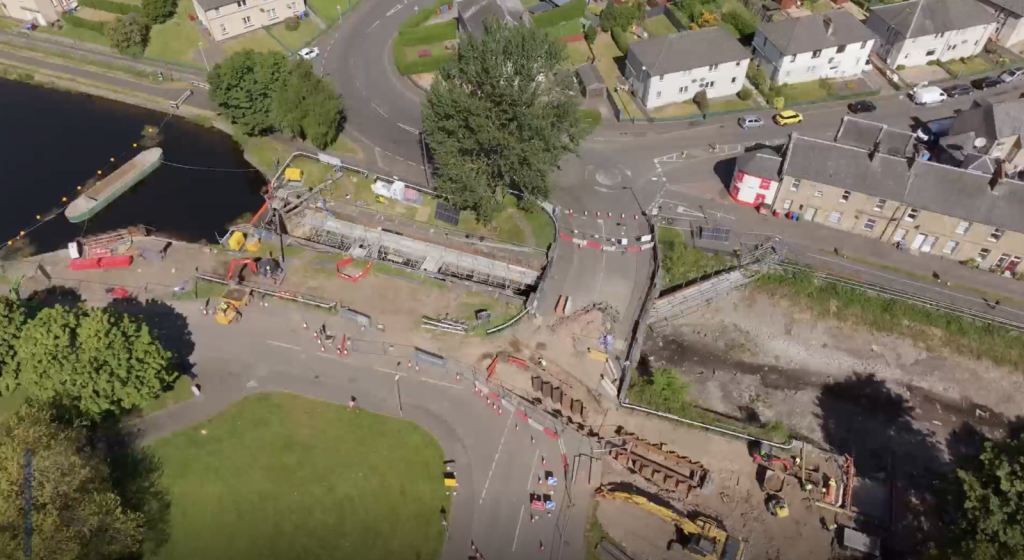
Based on previous experience and following a site survey conducted by our solutions team, we decided that a siphon would be the best solution for the task ahead.
The siphon would be maintained and monitored using our specialist control equipment and would only require power intermittent power in the event that the prime is lost. This meant the power requirements required were significantly reduced compared to a traditional pumped system.
Siphons are ideal for maintaining a constant flow such as canals, rivers and reservoirs. They run at a fixed speed, although can be adjusted if required via valves by operatives on site.
Once running, a siphon requires minimal input from operatives unless the flow requirements change. The siphon was maintained automatically by our specialist monitoring equipment and included remote telemetry, allowing users to monitor the system remotely. Additionally, given the fuel efficiency of a siphon compared to a pumped system, fuel deliveries were reduced to one per week.
The siphon solution has significantly reduced the systems power requirements. As a result, it has reduced noise pollution around the power and removed the risk of oils entering the waterways via a fault in pumps or generators. Additionally, the siphon has no moving parts, this means it offers a more reliable system. This greatly reduces the chances of any stoppages in pass forward flows that could negatively impact the wildlife and canal users downstream.
The siphon setup required only a small generator to power the entire system, rather than two much larger pumps. This not only reduced daily fuel consumption but also significantly cut down the number of fuel deliveries. Selwood is also exploring the use of battery technology for this project.