To reach the site, equipment had to pass under two low bridges with 3.7m clearance – but the height of the Siltbuster equipment alone was 2.6m, making this is a close fit. Siltbuster sourced transport with a low bed height to ensure safe clearance when getting close to the installation site.
The precise location of the installation was inaccessible by road, so equipment was placed on site using a HIAB crane. This operation had to be carried out carefully so as not to damage nearby trees.
The Siltbuster team looked for a solution that could fit in a very tight space, was proven to be reliable and required minimal involvement and maintenance effort from the site teams.
Siltbuster worked closely with pumping specialists from Selwood, a sister company the Wokrdry International Group, all the way from early engagement until completion of the project which would be operational for 10 weeks.
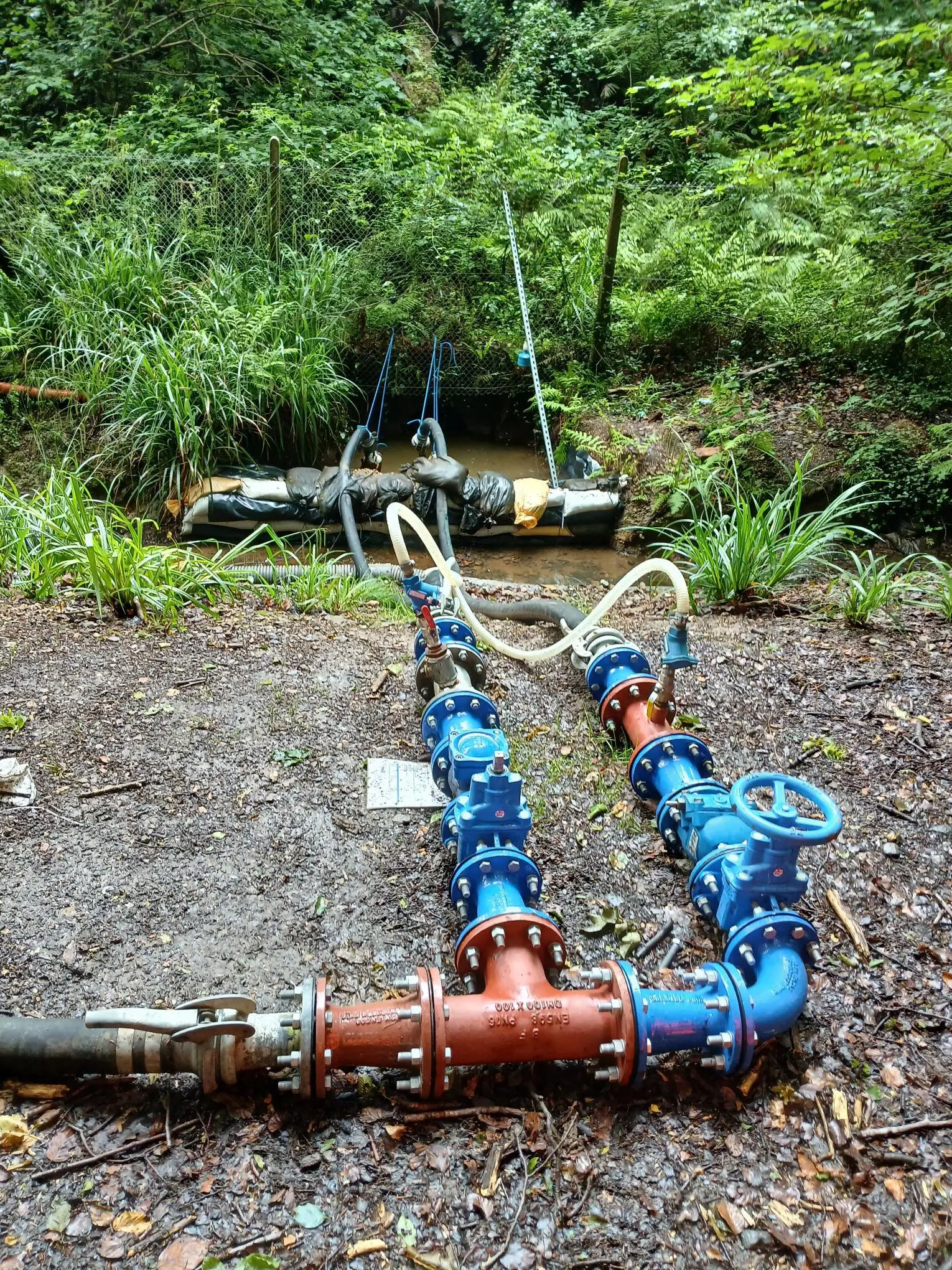
The solution was a pH adjustment and sediment control system, with Selwood electric pumps, used because they are more eco-friendly than diesel alternatives, used to transfer the water from the works into the treatment system. The average flow rate was around 5 m3/h with level of pH of the infeed water of around 12.
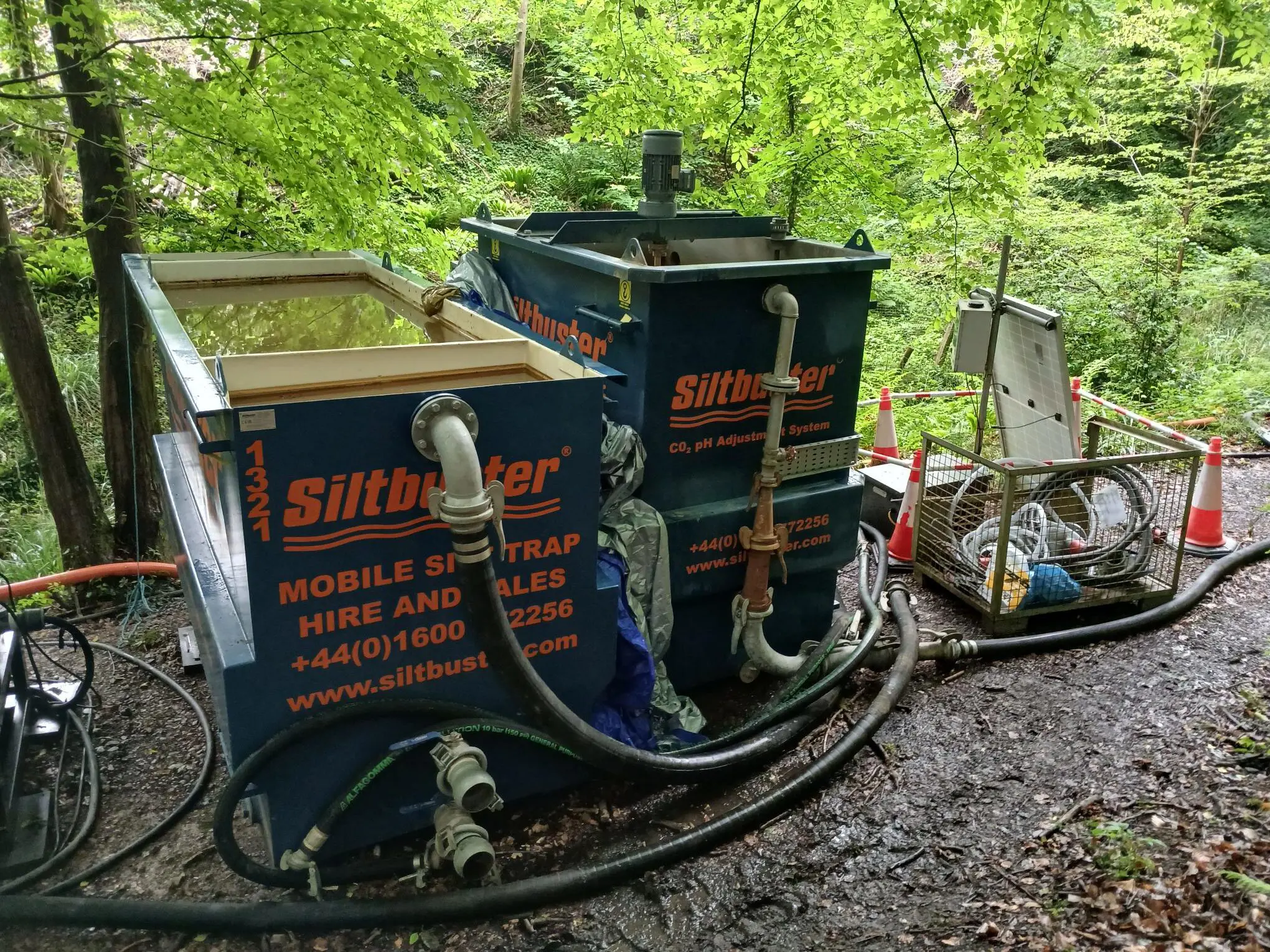
The water was treated with a Siltbuster DS4 mix tank with controlled dosing of carbon dioxide, and FB50 lamella clarifier, designed and manufactured at Siltbuster’s headquarters in Monmouth before being transported to site where they operate on a plug and play basis.
In this type of solution, the water is pumped into the DS4 tank where an integrated probe and pH controller monitors the pH levels of the water and automatically controls the CO2 dose rates. When the pH level reaches neutral levels (6-9) water is transferred into an FB50 lamella clarifier where it flows upward between inclined plates.
The cement and coarse particles settle on the plates and slide down to the sludge collection area where they can safely be removed.