
Sector


Infrastructure

West Midlands, UK
Location

2024
Date
The Summary
Developing a £2 billion, Net-Zero carbon national logistics hub requires the highest environmental standards, putting site runoff under intense local scrutiny. When an incumbent supplier’s water treatment systems failed to adequately clean surface runoff—leaving highly visible red/orange clay contaminants in the water—the principal contractor turned to Siltbuster.
Leveraging their technical expertise and on-site testing, our team designed and deployed a bespoke, two-stage chemical dosing and modular lamella clarifier solution. Capable of handling up to 27 litres per second per discharge point, this precision engineering successfully eliminated discoloration, securing strict environmental compliance and keeping the high-profile phase-one groundworks on track.
The Challenge
Siltbuster’s specialists were contacted in early 2024 when it was determined that the incumbent water treatment provider was struggling to adequately clean surface waste runoff from the groundworks.
The project was being delivered to meet high sustainability standards and is under high levels of scrutiny in the local area. A significant amount of groundworks, including some cut-and-fill operations, were taking place to install new roads and services and prepare the site for construction.
Meanwhile, the site’s natural geology included a red/orange coloured clay subsoil, which was still present as a contaminant in the surface water runoff after going through the existing treatment systems, causing it to be discoloured and ‘dirty’ in appearance. Siltbuster’s teams attended the site to take samples, which were analysed to determine the best course of treatment.
The project was being delivered to meet high sustainability standards and is under high levels of scrutiny in the local area. A significant amount of groundworks, including some cut-and-fill operations, were taking place to install new roads and services and prepare the site for construction.
Meanwhile, the site’s natural geology included a red/orange coloured clay subsoil, which was still present as a contaminant in the surface water runoff after going through the existing treatment systems, causing it to be discoloured and ‘dirty’ in appearance. Siltbuster’s teams attended the site to take samples, which were analysed to determine the best course of treatment.

The Solution
Siltbuster designed a solution specifically to the site requirements, involving two-stage dosing with a coagulant up front and a separate-stage flocculant added downstream.
This dosing aided the clumping of particles to help them naturally settle out for safe removal, carried out with precision so no reagents were carried over into the treated water.
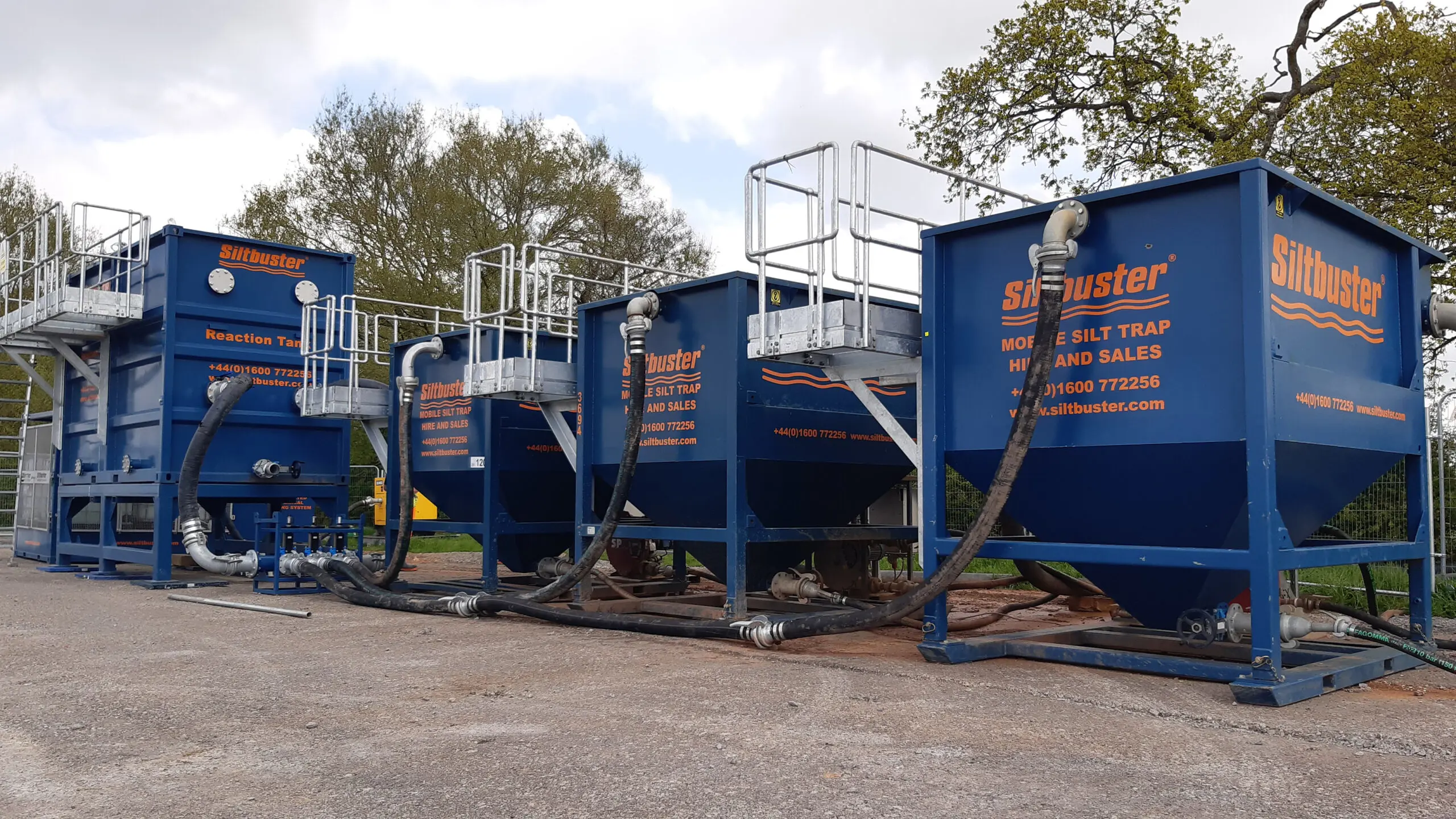
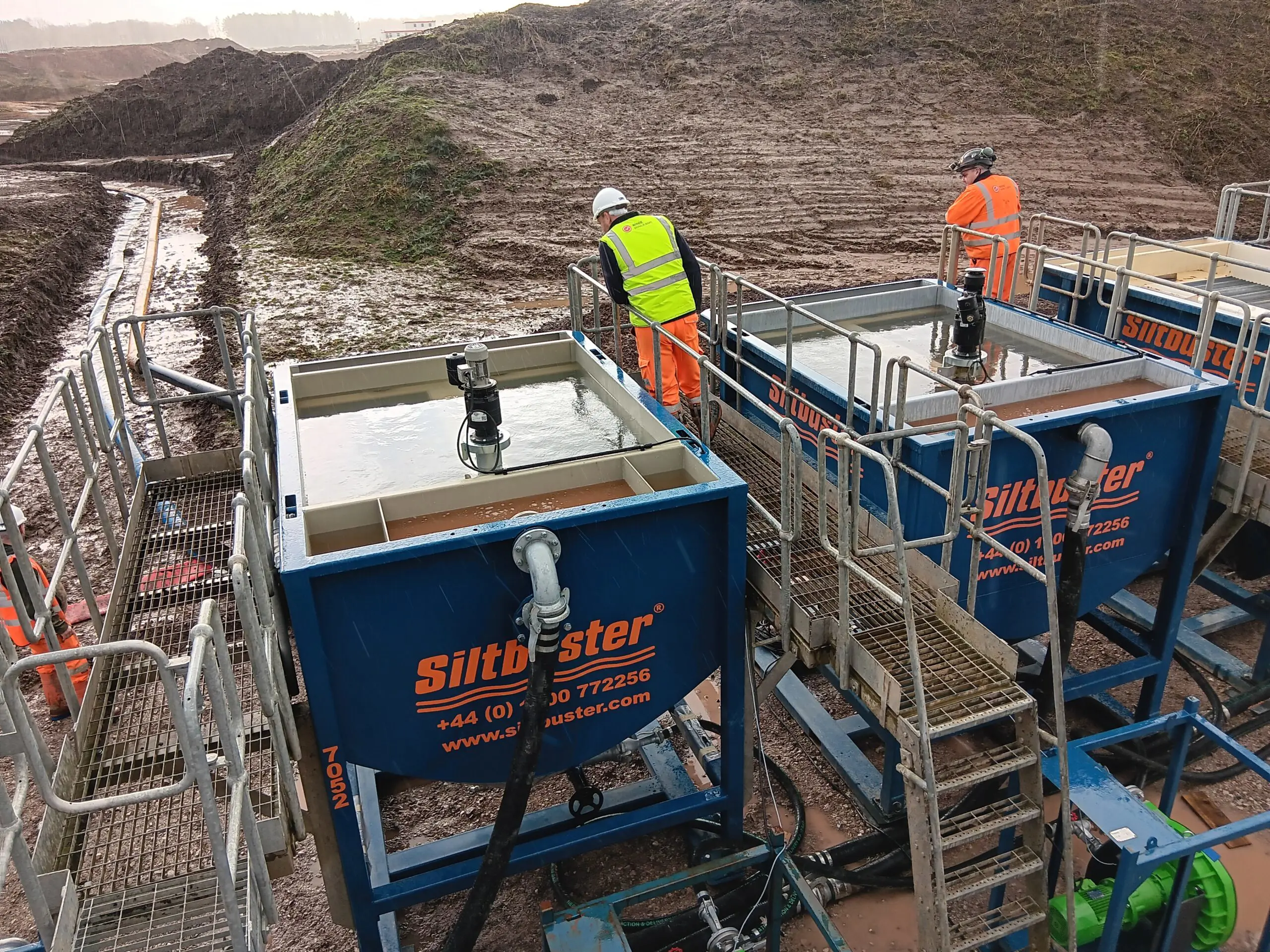
Siltbuster had four systems installed on site, each handling up to 27 litres per second per discharge point and comprising an MT20 or MT30 mix tank, followed by two or three lamella clarifiers where the contaminants settled out.
A sludge pump was fitted to each clarifier to help remove solids, with conical hoppers used for superior performance. Once the systems were installed, they were carefully monitored so adjustments could be made, including the addition of a stronger coagulant where needed.
Connect with our team
Get in touch with our water experts and we'll find a solution that works for you