
How to deal with industrial wastewater safely and efficiently this January
It’s been the most productive time of the year for many industrial businesses – but now the turkey has been eaten and the mince pies are a distant memory, it’s time to deal with the great post-Christmas clean-down.
Industrial businesses, from manufacturing to food processing, often generate higher volumes of wastewater than usual during the January mop-up – and some face a bigger challenge in removing wastewater than others, for example if the effluent they produce is especially high in fats, oils and greases.
Whatever causes the contamination, companies must adhere to strict regulations, such as those established in Section 118 of the Water Industry Act 1991, to discharge trade effluent into public sewers.
Failing to do so can be a costly option.
Reducing charges for discharging to the sewer
Although tankering wastewater away is a possibility, for all but the very smallest producers this is a costly and impractical solution. Most producers will end up discharging at least some, and probably most, of their wastewater to the sewer.
Water companies will charge for this using an industry standard method known as the Mogden Formula, which takes into account the levels of contaminants in wastewater.
A maximum level – the consent – is set for each business, above which it faces a red letter notice and possible fines. Conversely, by reducing the amount of contaminant discharged, Mogden charges can be dramatically reduced.
There are two ways to cut the amounts of these contaminants reaching the water network – reducing the amount of wastewater produced, and reducing the amount of contaminants present in the wastewater.
Since the first can be difficult to achieve, the latter is where the biggest opportunity lies. It’s here that Siltbuster’s highly flexible, modular water treatment systems can play their part as the clean-down commences.
Wastewater treatment – a three-stage process
The wastewater treatment process typically involves three stages: primary, secondary, and tertiary, each targeting specific pollutant types.
These are adapted for each site according to the pollutants present, flow rates, and consent requirements.
The stages are broadly:
Primary: The most common unit operations for preliminary treatment of solid waste include screens, sieves, and strainers. Preliminary treatment separates solids and large particles from the liquid and can remove a portion of any biological matter associated with these solids.
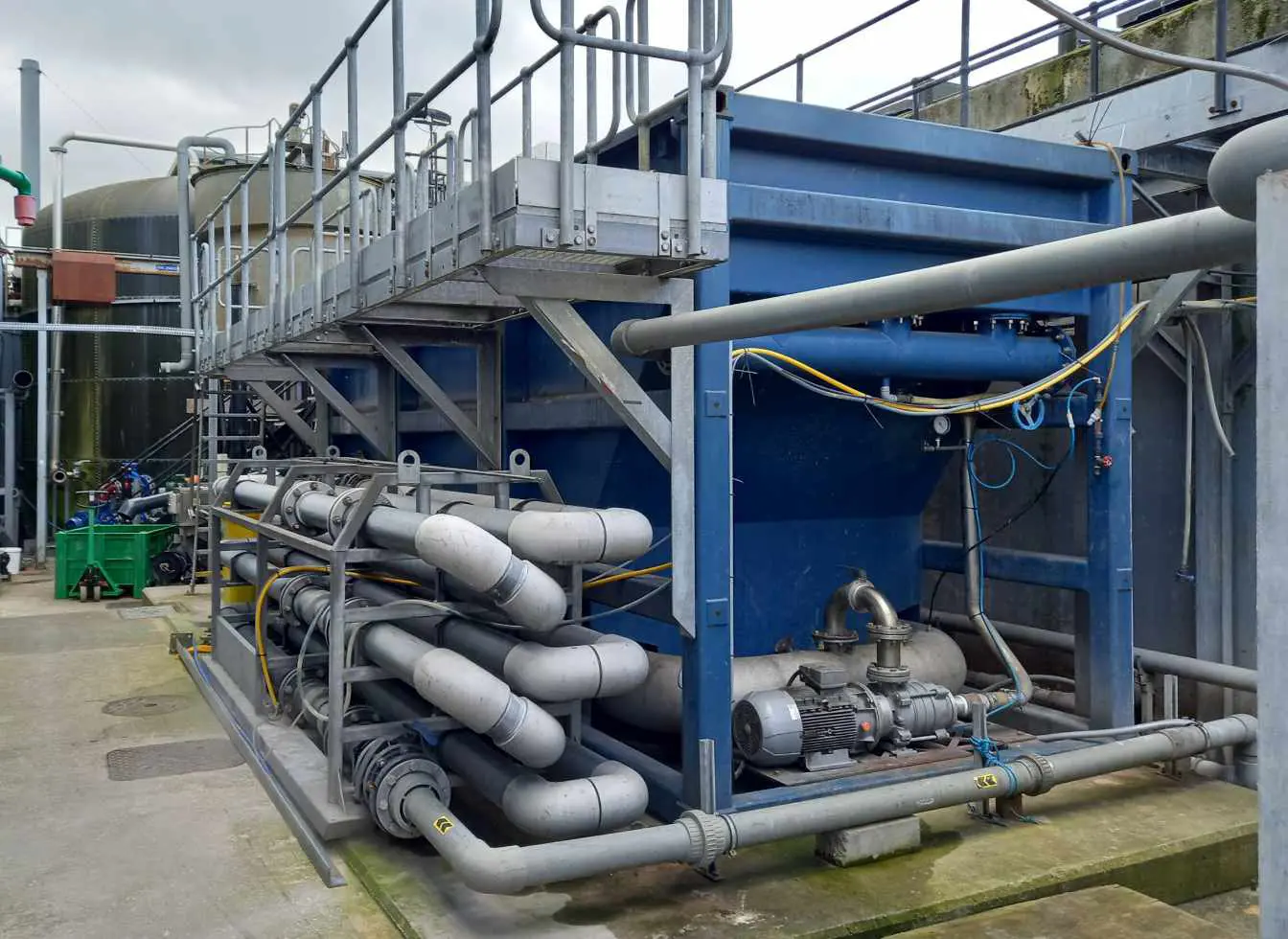
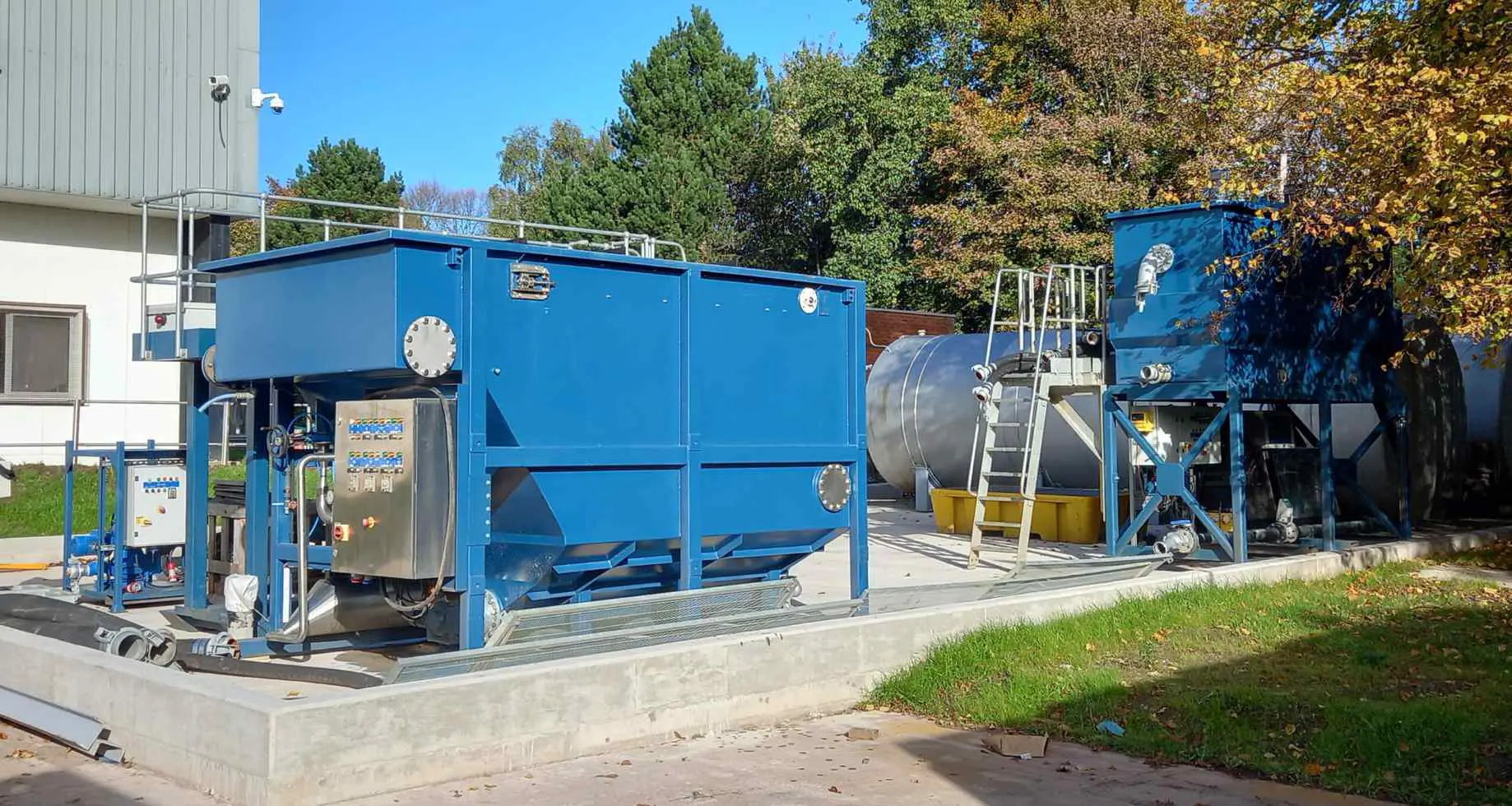
Primary treatment can include chemical coagulation-flocculation and settlement, and Dissolved Air Flotation (DAF), which removes a significant amount of suspended solids and the associated organic load.
Coagulants and flocculants can be added to enhance the effectiveness of DAF’s reduction of suspended solids and the associated Chemical Oxygen Demand (COD), Fats, Oils and Greases (FOG) and Biological Oxygen Demand (BOD). It is also required for phosphate reduction.
Secondary treatment includes anaerobic or aerobic treatment depending upon the biological load within the wastewater and the nature of the treated wastewater discharge point.
Ammonia and BOD/COD contaminants can be treated biologically with MBBR (Moving Bed Biofilm Reactor) units. These are plug and play aerobic units with a small footprint, containing plastic media which encourage the growth of bacteria which break down contaminants within the wastewater.
Tertiary treatment adds a third level of treatment. Primary and secondary treatment typically get wastewater only clean enough to discharge safely into the environment. Tertiary treatment, on the other hand, can achieve levels of water purification that even result in water that is safe to drink. Depending on the site, this may be achieved through a variety of methods including additional filtering or chemical treatment.
A modular answer
Modular water treatment systems come into their own when flexible solutions are required – with the intensive post-Christmas washdowns being a prime example.
It often makes no economic sense to make capital investment in equipment that is only fully used for part of the year. For many companies, extra capability, rented only when it is needed, is a much smarter solution.
Siltbuster’s modular solutions are used by our specialists to find the perfect fit for every industrial customer. The units are built off site and then transported to site as a fully packaged plug and play solution, installed by experts and set to work.
For large businesses, the savings resulting from reduced Mogden charges can mean equipment bought on a capital basis usually pays for itself in around three years.
For mid-sized and small producers, which are less likely to buy the equipment, a solution rented on a long-term basis can result in savings that have an immediate impact on their bottom line.
More than just cost savings
While reduction in Mogden charges and operational costs are attractive to any industrial business, there are other benefits to packaged, modular water treatment solutions.
- Eco benefits: Packaged solutions designed and assembled in the UK have a greatly reduced carbon footprint when compared to equipment shipped from overseas.
- Reputation: Businesses are increasingly making ESG (Environmental, Social and Governance) pledges – and a commitment to reducing contaminants in discharged wastewater is a powerful message.
Siltbuster’s solutions – for clean-downs that are compliant and cost-efficient
Siltbuster specialises in ensuring compliance and reducing wastewater charges for a wide range of industrial businesses, including those in manufacturing, food and beverage, dairies and agriculture.
All Siltbuster solutions are built with its SMART principles in mind – Standard, Modular, Agile, Responsive Treatment.
This makes them easily deployable, highly flexible and expandable, and tailored for each project’s specific needs.
If you need expert advice on carrying out your post-Christmas clean-down as safely, efficiently, cost-effectively and compliantly as possible, just get in touch via the contact form Click here